
People often rule out crystal in a small room, assuming it will feel crowded or formal. In practice, a well-sized crystal chandelier can make a modest space feel brighter and more open than almost any other fixture.People often rule out crystal in a small room, assuming it will feel crowded or formal. In practice, a well-sized crystal chandelier can make a modest space feel brighter and more open than almost any other fixture.
In This Article:
What crystal actually does with light
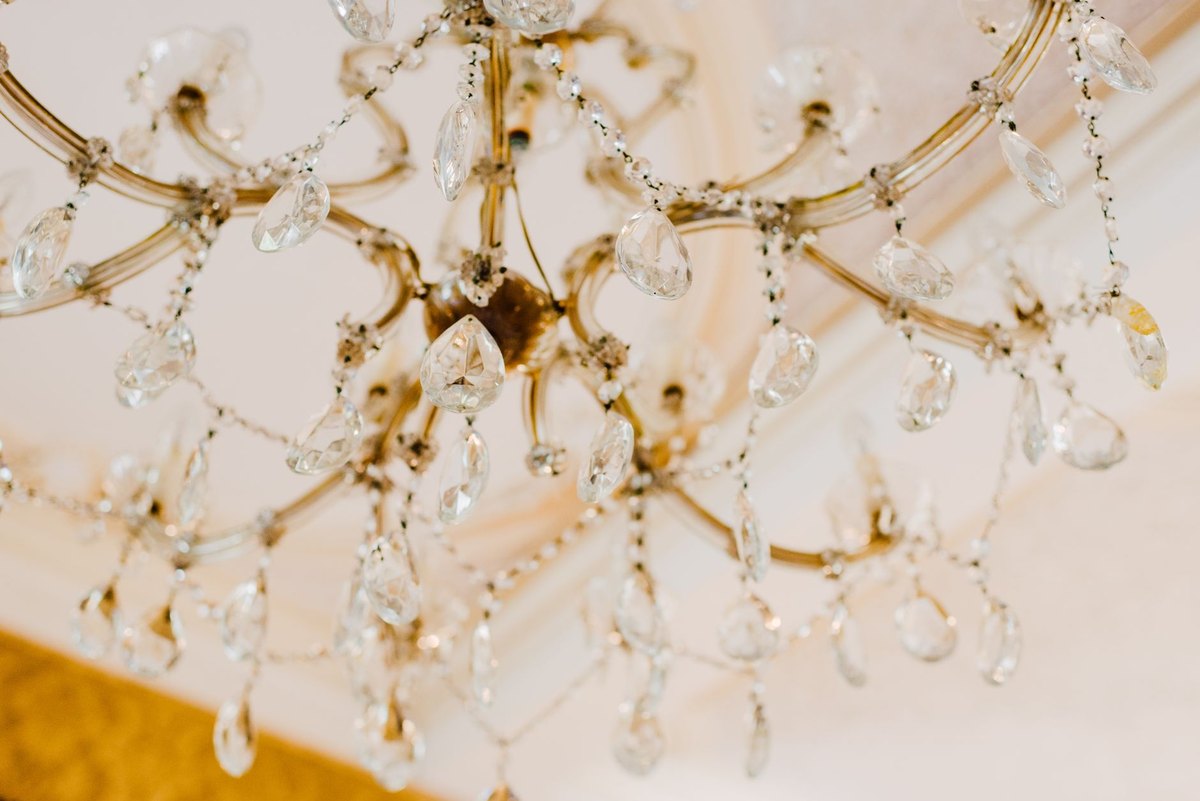
A plain glass shade spreads light evenly. Cut crystal breaks it up. Each facet acts like a small prism, sending sharp points of light and faint spectral color across the ceiling and walls. In a large room those reflections get lost in the distance. In a small room they land on nearby surfaces, so the effect is more noticeable, not less.
That is also why a crystal fixture can make a room feel larger. Light moving across walls and ceiling gives the eye more to read, and the boundaries of the space seem less fixed.
Sizing crystal for a compact space
The standard formula still applies: add room length and width in feet and use the total as a diameter in inches. A 10 by 11 foot (3.0 by 3.4 m) room gives about 21 inches (53 cm). With crystal, it often pays to stay at or slightly under that figure, because crystal adds visual weight through reflection. A dense 18-inch (46 cm) crystal piece can hold a small room as well as a 24-inch (61 cm) open metal frame.
Crystal Chandelier Sizing for Small Rooms
| Room | Formula Result | Dense Crystal | Sparse Crystal |
| Powder room 5 x 7 ft | 12 in (30 cm) | 10 – 12 in | 12 – 14 in |
| Small bedroom 10 x 10 ft | 20 in (51 cm) | 16 – 18 in | 20 – 22 in |
| Breakfast nook 8 x 10 ft | 18 in (46 cm) | 14 – 16 in | 18 – 20 in |
| Home office 10 x 12 ft | 22 in (56 cm) | 18 – 20 in | 22 – 24 in |
| Compact dining 11 x 12 ft | 23 in (58 cm) | 18 – 22 in | 22 – 26 in |
Low ceilings need the right profile
Small rooms often come with 8-foot (2.4 m) ceilings. A tall tiered crystal fixture can push its bottom edge too close to people’s heads. In those rooms, look at flush or semi-flush crystal designs, a single shallow ring, or a compact globe of crystals. You keep the light play without losing headroom. Over a table, the usual 30 to 36 inches (76 to 91 cm) above the surface still applies, and that rule often allows a slightly taller fixture than a walkway would.
| Small-room type | Crystal profile that fits | Watch out for |
| Powder room | Mini flush crystal or single pendant | Moisture near shower |
| Walk-in closet | Small flush or semi-flush | Glare on mirrors |
| Bedroom, 8 ft ceiling | Semi-flush crystal ring | Bare bulbs over the bed |
| Breakfast nook | Compact round over table | Hanging too high |
| Home office | Sparse crystal, warm light | Screen glare |
Getting the color temperature right
Crystal reflects whatever light you give it. Warm white around 2700K to
3000K makes it glow and suits bedrooms, dining areas, and dressing rooms. Neutral 3500K to 4000K looks crisper and fits offices or bathrooms with white tile. Cool light above 4000K tends to make crystal look harsh. A dimmer helps in any small room, because a little crystal light at low levels goes a long way.
Where small-room crystal works best
Powder rooms, dressing areas, and compact dining spaces are natural candidates because people spend short, focused time in them and notice the details. In a bedroom, choose a design that hides the light source so you aren’t looking straight at a bright point from the pillow.
Choosing crystal density for the room’s style
Density means how many crystals the fixture carries relative to its size. A dense layout of strands and tiers feels traditional and glamorous. A sparse layout, with a single row or a few drops on a clean frame, feels current and lighter. In a small room, sparse designs give you the light play without making the ceiling feel busy, and they suit modern or minimalist furniture better.
Dense crystal can still work in a small formal space such as a powder room or dressing area, where a single compact fixture is the only decorative piece in the room.
Pairing crystal with mirrors and surfaces
Small rooms often have mirrors, glossy tile, or lacquered furniture. These multiply crystal reflections, which can be lovely or overwhelming. If a room already has a large mirror, a smaller or sparser crystal fixture is usually enough. Matte walls, by contrast, let you use a slightly denser design, since fewer surfaces bounce the light back.
| Room surface | Effect on crystal light | Adjustment |
| Large mirror | Doubles reflections | Sparser or smaller fixture |
| Glossy tile | Bright, sharp sparkle | Warm color temperature |
| Matte painted walls | Softer, even spread | Denser crystal works |
| Dark walls | High contrast points | Dimmer recommended |
Bathroom crystal considerations
In bathrooms, check the fixture’s damp rating before placing it near a shower or tub. Keep crystal fixtures away from direct steam where possible, since moisture leaves mineral spots faster. A powder room without a shower is the easiest bathroom for crystal.
Placement in rooms without a central box
Small rooms, especially closets and older bathrooms, sometimes have the ceiling box off-center or near a wall. A compact crystal fixture placed off-
center draws attention to the mismatch more than a plain light would, because it reads as a focal point. If the box can’t be moved, a flush crystal design that sits close to the ceiling is less noticeable than a hanging piece, since it doesn’t create a visible line down to an empty spot on the floor.
Making the most of a small space
Size to the formula or slightly under, pick a profile that respects your ceiling height, and keep the light warm and dimmable. Done that way, crystal brightens a small room rather than crowding it. Browsing faceted crystal
lighting designs by diameter is a quick way to see which pieces fit a compact footprint. Small rooms are often where crystal makes its strongest impression.