

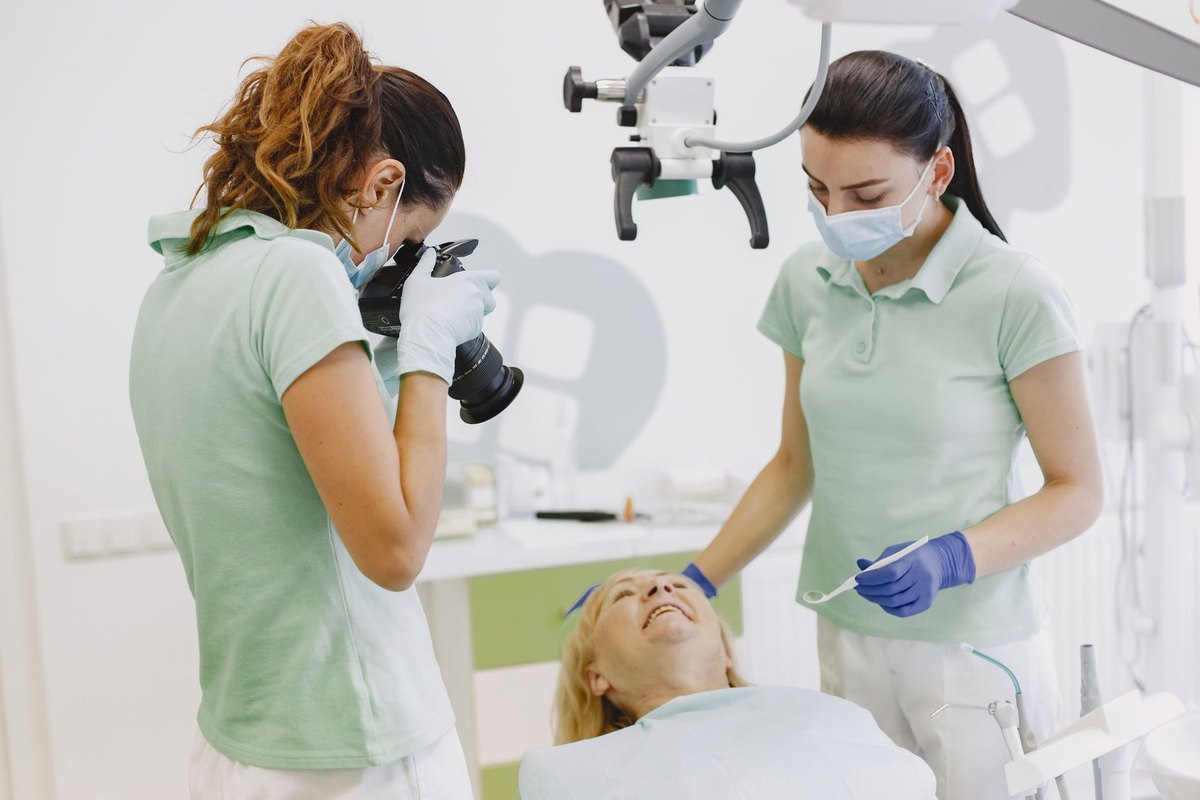
Photography has become an important part of many professions, but its role in dentistry is particularly interesting. What was once primarily a tool for recording a patient’s appearance now helps dental professionals evaluate treatment outcomes, communicate complex information, and document procedures with remarkable precision. Modern cameras, specialized lenses, and carefully controlled lighting allow clinicians to capture details that might otherwise be difficult to communicate. As dental procedures become increasingly sophisticated, professional photography continues to influence how practitioners approach patient care, education, and clinical documentation.
In This Article:
The Growing Importance of Visual Documentation in Dentistry
Dental professionals frequently work with structures that are small, intricate, and difficult to examine without appropriate lighting and magnification. Capturing detailed photographs allows practitioners to study the condition of teeth, gums, and surrounding tissues from perspectives that may not be immediately apparent during a routine examination. These images can complement clinical records, giving dentists a visual reference when evaluating treatment options or monitoring changes over time. Photography also creates opportunities to compare the condition of a patient’s mouth before, during, and after treatment.
Visual documentation becomes especially valuable when patients require complicated restorative procedures involving several stages of treatment. Dental professionals going through training, like an implant restoration course, for example, may encounter clinical situations where photographs help illustrate implant positioning, restorative design, and the relationship between dental structures. Detailed images can also support discussions about treatment planning and the technical decisions involved in restorative dentistry. When used alongside clinical examinations and appropriate diagnostic imaging, photography offers another perspective on the treatment process.
Why Lighting and Camera Positioning Make Such a Difference
One of the greatest challenges in dental photography is capturing accurate color and texture inside an environment where natural lighting is limited. Teeth have complex optical characteristics, and their appearance can change depending on the direction, intensity, and color temperature of the light. Poor lighting may conceal subtle surface details or create reflections that interfere with evaluating the photograph. Professional lighting techniques help produce more consistent images while reducing unwanted shadows and glare.
Many dental photographers use macro lenses because they allow close-up images of small structures while preserving useful detail. Ring flashes and twin-flash systems are common accessories, although each produces different lighting characteristics depending on the subject and clinical purpose. A ring flash can provide relatively even illumination, while adjustable twin flashes offer additional control over shadows and surface texture. Choosing an appropriate setup depends on the type of photograph being taken and the information the clinician wants to capture.
Helping Patients Understand Their Treatment Options
Dental terminology can be unfamiliar to patients, especially when discussing procedures that involve several different treatment stages. A dentist may understand the significance of a worn tooth surface, damaged restoration, or changing gum condition, while the patient may struggle to imagine what those findings mean. Clear photographs can make these conversations easier by giving patients something concrete to examine. Instead of relying entirely on technical explanations, practitioners can point to visible details and explain their relevance.
Before-and-after photographs can also demonstrate the kinds of changes that restorative or cosmetic procedures may produce. However, these images should be presented responsibly, with appropriate patient consent and without suggesting that every individual will experience identical results. Differences in lighting, camera angles, and image editing can influence how dramatic a change appears. Maintaining consistent photography standards helps protect the accuracy of visual comparisons and supports more transparent patient communication.
Creating Better Educational Resources for Dental Professionals
Clinical photography provides an important resource for dental education because it allows instructors to present real examples of anatomical structures, treatment techniques, and clinical challenges. Students can examine photographs repeatedly, identify important details, and compare different approaches to similar situations. This is especially useful in subjects where understanding subtle visual differences contributes to clinical judgment. A carefully documented case can communicate information that would be difficult to convey through written descriptions alone.
Educational photographs become even more valuable when arranged in a logical sequence. Images showing the initial condition, intermediate stages, and completed treatment allow learners to understand how decisions influence the overall process. Instructors can combine photographs with diagrams, radiographic images, and written explanations to create comprehensive teaching materials. This approach encourages students to connect technical knowledge with the practical realities of treating patients.
Managing Images Responsibly in a Clinical Environment
The increased use of photography in healthcare creates responsibilities that extend beyond capturing technically accurate images. Dental photographs may contain identifiable patient information, and even close-up images can become part of protected clinical records. Practitioners must understand applicable privacy requirements and establish appropriate procedures for obtaining consent, storing images, and controlling access. Photographs intended for education or marketing may require permissions beyond those associated with ordinary clinical documentation.