
A room that looks perfectly presentable in person can look surprisingly busy in a photograph. The camera compresses everything into one frame, so countertop clutter becomes more obvious, furniture can interrupt sightlines, and a small maintenance issue may attract far more attention than expected.
Preparation for professional real estate photography should therefore start with what the camera will see, not ordinary housekeeping. The aim is to give the photographer clear compositions and let the property itself hold the viewer’s attention.
The approach below also incorporates tips from Curb360 photography experts on preparing interiors and exteriors before the photographer arrives. Much of the work is simple, but completing it beforehand gives the photographer more time to concentrate on composition, light, and the features that deserve emphasis.
In This Article:
Look at Each Room as a Photograph
Stand at the doorway before changing anything. This is often close to where a photographer will first assess the room, and it immediately reveals objects that interrupt the view.
A chair may work perfectly well for daily life yet block the visual connection between the living room and patio doors. A large ottoman can dominate the foreground. Furniture does not need to disappear, but the room should be easy to read in a single frame.
Taking a quick phone photo can also expose distractions that the eye has stopped noticing. A charging cable or refrigerator magnet may disappear into everyday surroundings but become surprisingly prominent once the room is reduced to an image.
Remove Visual Noise Without Making the Home Empty
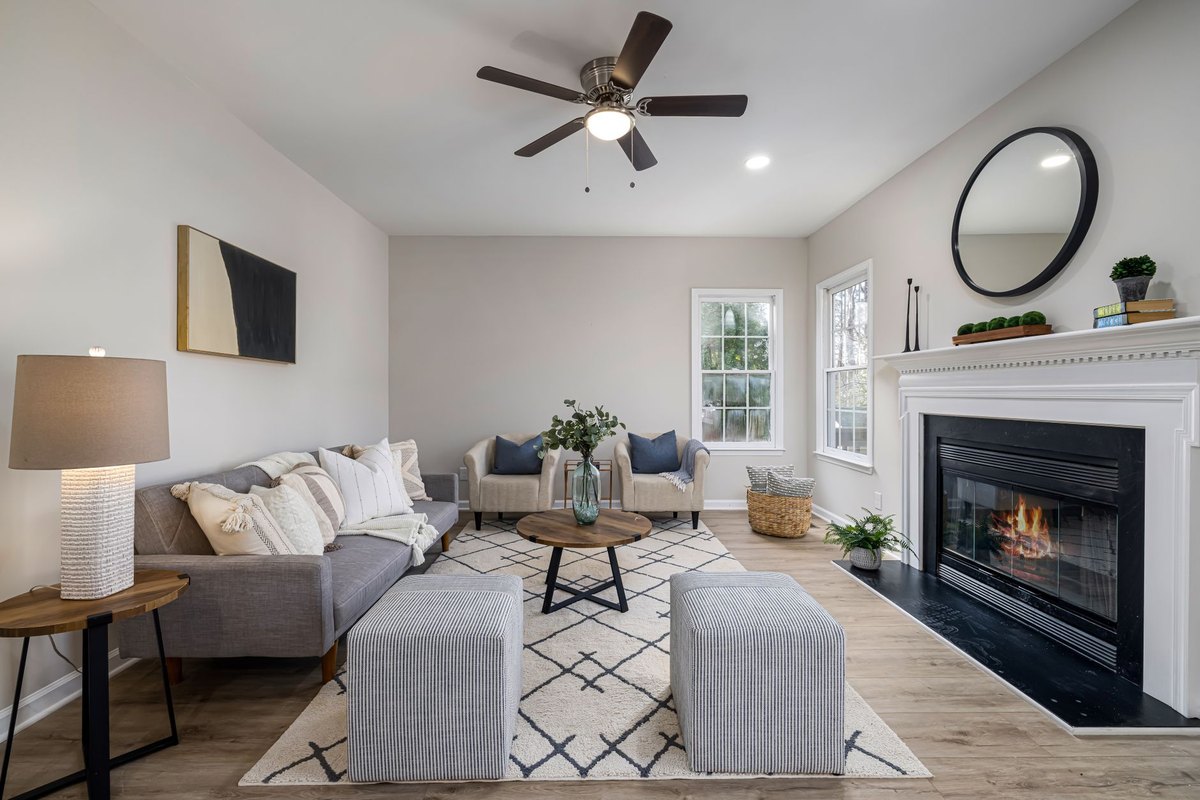
Decluttering for photography is different from clearing a property completely. A room with nothing on any surface can feel unfinished, while one filled with personal belongings gives the camera too many competing points of interest.
Kitchen counters benefit from the most restraint. Everyday appliances and cleaning supplies can hide useful counter space and break up otherwise clean lines. Bathrooms need similar attention because toiletries around a sink become visually dominant in a wide photograph.
Personal photographs deserve a selective edit, too. Removing some of them keeps attention on the room rather than the current occupants. Decorative objects can remain when they support the composition instead of competing with it.
Large furniture needs a different judgment. Removing one unnecessary piece from a crowded room can open the view considerably. Do any major rearranging before the photographer arrives, since they may not be able to move furniture because of time and liability constraints.
Prepare the Light Before the Camera Arrives
Natural light can change the character of an interior, but windows need attention before shoot time. Clean glass is especially noticeable when a photographer exposes the room to retain a bright exterior view. Marks that seem minor in ordinary use can become much clearer in the finished photograph.
Window treatments should also look intentional. Blinds at different heights create irregular lines across a room, while one half-closed curtain can make a window appear smaller than the one beside it. Set matching windows consistently unless there is a specific reason to treat one differently.
Check every permanent light fixture before the appointment. A burned-out bulb immediately creates an uneven room, and mismatched bulb colors can produce distracting warm and cool patches. Replacing bulbs beforehand is much easier than discovering the problem after the photographer has positioned the camera.
The photographer can decide how much artificial light belongs in the final exposure. The homeowner’s job is simply to make sure every fixture is clean, functional, and available.
Give Kitchens, Bathrooms, and Bedrooms a Final Reset
Certain rooms reveal unfinished preparation faster than others. Kitchens are especially unforgiving because long countertops make individual objects easy to spot. Clear anything that does not improve the photograph, then check the sink and appliance fronts for marks.
Bathrooms need fewer visible items than most rooms. Close toilet lids before the shoot and clear personal products from the vanity. Mirrors deserve a last inspection from different angles because streaks become much easier to see when photographed against bright light.
Bedrooms usually need less intervention once the bed is properly made. Smooth the bedding rather than trying to make it unnaturally perfect. Keep clothing and personal items out of view, and keep the floor around the bed clear enough for the photographer to work.
Do this reset before the scheduled arrival time. Moving miscellaneous objects from room to room while photography is underway usually creates a new problem somewhere else and slows the session considerably.
Finish the Exterior Before Working Back Indoors
The exterior often provides the listing’s first image, yet it is easy to leave until the photographer is already on site. Vehicles are one of the biggest avoidable obstructions. Move them away from the driveway and, when possible, away from the immediate front of the property before shooting begins.
Look at the yard for objects that make sense in daily life but add nothing to the photograph. Move trash containers out of view. Garden hoses can be stored neatly. Deal with pool equipment and toys before an elevated or wide exterior view exposes them.
Basic yard maintenance is best completed earlier rather than on shoot morning. Freshly cut grass and clean hardscaping photograph better when the work itself is no longer visible.
If you plan drone photography, preparation extends beyond what you can see from the sidewalk. An aerial camera can expose areas behind fences and beside garages that are barely noticeable from ground level. The roof and full site become part of the presentation, so the exterior needs to be considered as a whole rather than as a front-door photograph.
Leave the Photographer a Property That Is Ready to Shoot
Before the appointment, put away cleaning equipment, secure pets, and make sure people who do not need to be present are out of the photographer’s working path.
A professional photographer will still make decisions on site. Furniture may look different through a particular lens, or an exterior angle may work better once the sun has moved. Those are photographic decisions. Cleaning, decluttering, minor repairs, and basic staging should already be complete.
That separation makes the session more productive. Instead of spending appointment time hiding household items, the photographer can work on perspective and composition. It also increases the chance each room gets the attention it needs, rather than being rushed because preparation took up part of the booking.
The most useful final test is simple: walk through the property once without tidying anything as you go. If you immediately notice an object you wouldn’t want in the listing photos, deal with it before the camera arrives.